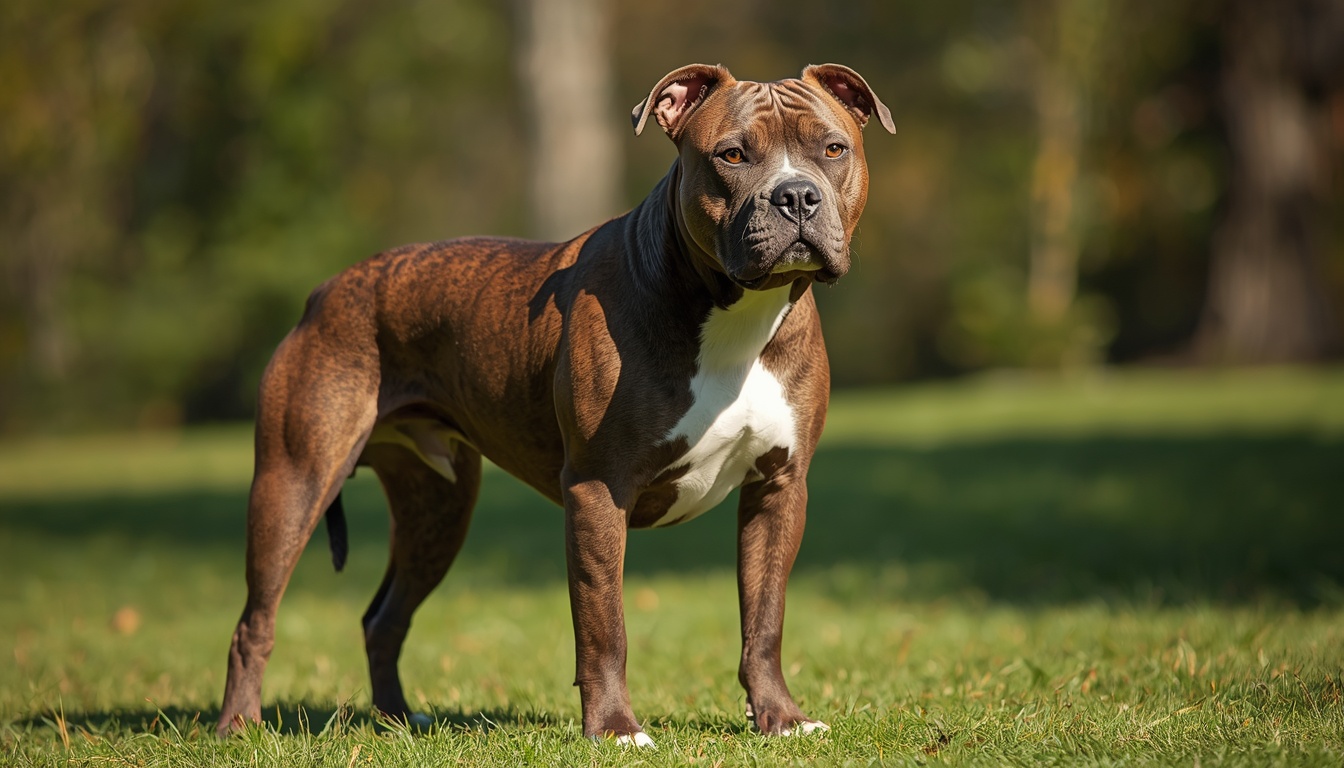
Staffy Colours
Staffy Colours: The Complete Guide to Every Coat, Pattern and Rare Variation
If you’ve spent any time on Staffy Facebook groups or scrolling through puppy ads, you’ll have noticed something: “rare colour” gets used a lot. Rare blue. Ultra-rare lilac. One-of-a-kind merle. Half the time it’s marketing, not genetics — and it’s usually the buyer who pays the premium and, sometimes, the dog who pays the real cost.
I’m not a vet or a breeder. I’m a Staffy owner — my boy Guinness is a classic brindle, the colour most people picture when they think “Staffy” — and I’ve spent a fair bit of time working out what’s actually true about this breed’s colours versus what’s just good copywriting. This guide is the result: every officially recognised colour, how patterns like brindle actually work, which “rare” colours are worth questioning, and an honest look at the one health question every blue Staffy owner eventually googles.
Quick answer up front, for anyone skimming: a Staffy’s coat colour comes down to two pigments and one dilution gene, there are six recognised base colours under the UK Kennel Club standard, and “colour” and “pattern” are two different things that most guides on this topic mix up.
What Colours Are Officially Recognised?
Under the UK Kennel Club and FCI breed standard, a Staffordshire Bull Terrier’s coat should be one of the following:
Any of the first five can appear combined with white — a black-and-white Staffy, a red-and-white Staffy, and so on — and brindle can also appear with white. Black-and-tan or liver colouring is listed as “highly undesirable” in the UK standard.
Here’s where it gets interesting: cross the Atlantic and the American Kennel Club standard is stricter. Black-and-tan or liver isn’t just undesirable there — it’s a full disqualification from the show ring. The American standard also explicitly rules out merle, which the UK standard doesn’t even bother mentioning, because merle was never part of the breed to begin with. We’ll come back to that.
If you’ve seen articles claiming there are “14 Staffy colours” or “19 Staffy colours,” this is usually where the count gets inflated — every colour-plus-white combination gets treated as its own separate colour. Technically, there are six base colours. Everything else is a variation of those six, which brings us to the distinction that actually matters.
Colour vs Pattern — A Distinction Most Guides Skip
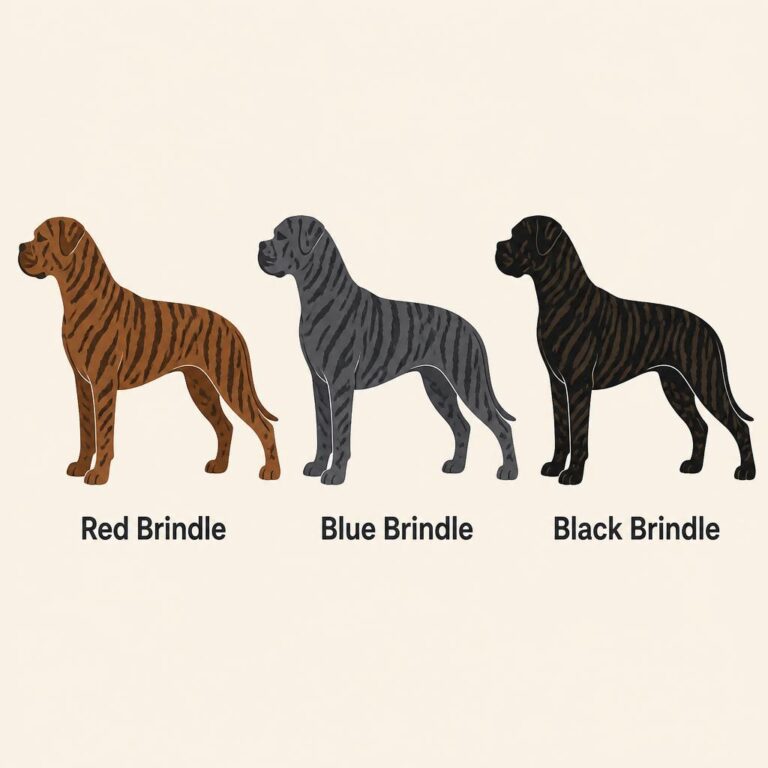
This trips people up constantly, so let’s sort it out properly: brindle isn’t a colour. It’s a pattern — stripes of a darker shade layered over a base colour. Same with “pied” or “particolour,” which just means a colour combined with white in patches.
So when someone says their dog is “blue brindle,” they mean a blue base colour with the brindle striping pattern on top. A “red and white” dog is a red base colour with the white patch pattern. Once you separate colour from pattern, the whole topic gets a lot less confusing — and a lot less padded than the “19 colours!” listicles would have you believe.
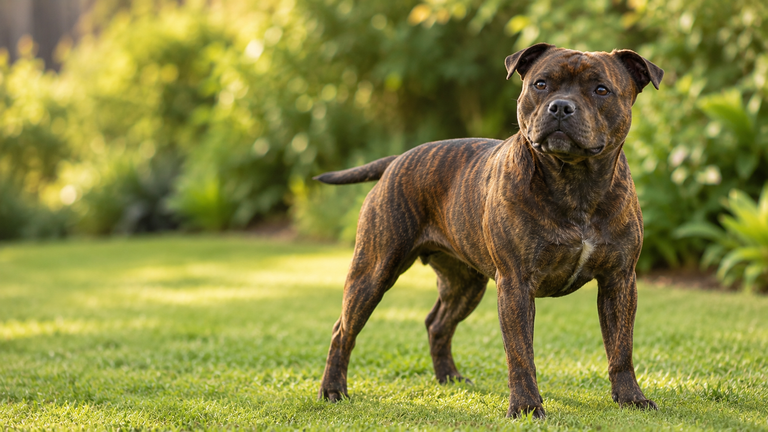
Brindle Staffy
Brindle is the pattern most people associate with the breed, Guinness included. It ranges from a light, sandy base with faint striping right through to such a dark, tight brindle it can look almost solid black in certain light — you sometimes only notice the stripes properly when the sun hits his coat side-on. It’s a genuinely practical colour too: the pattern hides dirt, dust and the general scruffiness that comes with a dog who thinks every muddy puddle is a personal invitation.
Fawn and Tan Staffy
Fawn and tan get used almost interchangeably by owners, though the standard technically refers to fawn. Expect anything from a pale biscuit shade through to a richer, deeper tan. Like red, a fawn Staffy should still have a black nose — a fawn dog with a pink or “Dudley” nose is a sign of something other than pure breeding going on.
Red Staffy
A proper red Staffy carries a deep, warm red-to-ginger coat, sometimes flecked with white. The giveaway for a genuine red Staffy is the nose: it’s always black, never red. If you see a “red-nosed Staffy” advertised as a color variant, that’s actually a cue to ask more questions about the dog’s parentage — a matching red nose usually points to crossbreeding rather than a rare Staffy trait.
Black Staffy
Solid black is one of the more striking, classic looks on this breed — glossy and sharp against their muscular build. One thing worth knowing if you’re a black Staffy owner: coats can visibly lighten or develop a slight brownish cast with age and sun exposure, which is completely normal and not a sign of anything wrong.
White Staffy
White Staffies are eye-catching but need a bit more sun-care than other colours — pale skin under a light coat is more prone to sunburn, so a bit of shade on hot days and pet-safe sunscreen on exposed skin (nose, ear tips) is a genuinely useful habit, not overcautious fussing.
It’s also worth knowing the difference between a white Staffy and an albino one, because they’re not the same thing. A true albino Staffy is genuinely rare and will have pink-toned skin around the eyes and a pink nose, rather than the black or dark brown nose and pigmented skin you’d see on a standard white Staffy.


The Genetics, in Plain English
You don’t need a biology degree to understand Staffy colour genetics — the short version covers what you actually need to know.
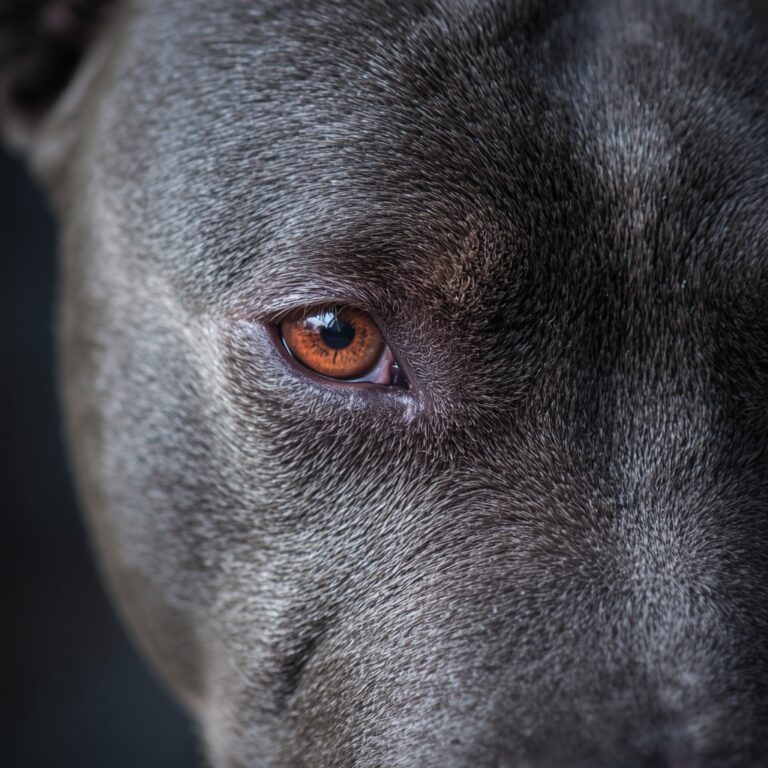
Coat colour comes down to two pigments: eumelanin, which produces black-based colours, and phaeomelanin, which produces red-based colours. Sitting alongside those is a dilution gene — recessive, meaning a puppy needs two copies of it to actually show the effect. When a dog inherits two copies, black gets diluted down to a steely blue-grey, and red/fawn shades get lightened too.
That one gene is the reason blue exists as a colour at all — and it’s also the reason blue comes with a health conversation that red or black simply doesn’t.
Blue Staffies — The Most Searched, Most Misunderstood Colour
Let’s deal with the marketing first: blue is heavily promoted as rare and exclusive, and priced accordingly. In reality, so many breeders have chased the blue colour over the past couple of decades that it’s arguably no longer the rarest colour in the breed — it’s just the most fashionable one, which isn’t the same thing at all.
Now the part that actually matters for anyone considering — or already owning — a blue Staffy.
The health question: colour dilution alopecia
That same dilution gene that creates the blue colour can, in some dogs, interfere with how pigment-carrying cells are distributed along the hair shaft. When that happens, it can lead to a condition called Colour Dilution Alopecia (CDA) — patchy, progressive hair thinning that usually starts appearing somewhere between three and twelve months of age, sometimes alongside dry or irritated skin.
Here’s where I want to be straight with you rather than sensationalise it, because a lot of blogs either downplay this completely or treat every blue Staffy as a walking health risk, and neither is accurate. The research on this isn’t as clean-cut as either extreme suggests. There’s no proven direct causal link between the dilution gene itself and CDA — plenty of dilute dogs never develop it. Work done in other dilute-coated breeds points toward intensive or careless breeding practices, rather than the colour itself, as the bigger risk factor.
What that means practically: the question worth asking a breeder isn’t “is blue unhealthy” — it’s whether they’re breeding blue-to-blue. Pairing two dilute dogs concentrates the dilution gene and any related fragility, and that’s the pattern responsible breeders and long-time owners consistently flag as the actual problem.
If your own blue Staffy starts losing patches of coat or develops irritated skin, get a proper vet check rather than assuming it’s CDA (or assuming it isn’t) off the back of an article like this one. It’s a manageable condition in most cases with the right skincare routine and diet, but it does need a vet’s eyes on it, not a Google search.
Rare and Contested Colours
This is where “rare” gets thrown around loosest — and where a bit of scepticism serves you well as a buyer.
Lilac
Lilac is a further dilution beyond blue, and it isn’t a recognised standard colour. When you see it advertised, it usually signals deliberate breeding outside the standard purely for novelty appeal — worth knowing before you pay a premium for it.
Tri-Colour and Piebald
You’ll occasionally see tri-colour or piebald Staffies advertised — a base colour with white and tan/tan-point patches. These are uncommon and sit outside the tight breed standard, though they’re not the welfare red flag that merle is (more on that below).
Merle — Does It Actually Exist in Staffies?
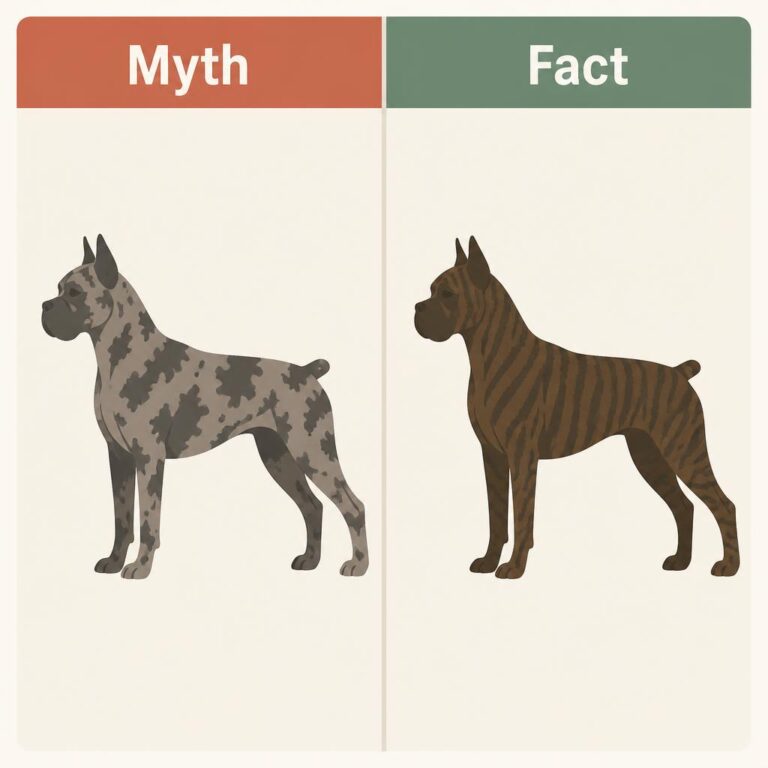
Short answer: no, not naturally. Merle is not part of the Staffordshire Bull Terrier’s genetic makeup. Any Staffy-type dog showing the mottled, marbled merle pattern has merle somewhere in its ancestry from crossbreeding with a merle-carrying breed — it isn’t a rare purebred variant, whatever the ad says.
This isn’t just an opinion — it’s reflected in how kennel clubs actually treat it. The UK Kennel Club stopped accepting merle-coloured Staffordshire Bull Terrier puppy registrations back in January 2010, specifically at the request of the Staffordshire Bull Terrier Breed Council. The American standard goes further and explicitly disqualifies the merle pattern outright.
There’s also a genuine welfare reason breed councils pushed back on merle, not just a purity-of-breed one. Breeding two merle-carrying dogs together (double merle) significantly raises the risk of blindness and deafness in the puppies. So if you come across a “merle Staffy” for sale — and you will, they show up regularly in classifieds — it’s worth asking direct questions about what’s actually in the pedigree before assuming you’re looking at a purebred rarity.
Quick Reference Table
|
Colour |
Recognised? |
Base or dilute |
Health note |
|---|---|---|---|
|
Red |
Yes |
Base |
None specific |
|
Fawn |
Yes |
Base |
None specific |
|
White |
Yes |
Base |
Sun sensitivity |
|
Black |
Yes |
Base |
None specific |
|
Blue |
Yes |
Dilute |
Linked to CDA in some dogs |
|
Brindle |
Yes (pattern) |
Pattern over base colour |
None specific |
|
Black-and-tan / Liver |
Undesirable (UK) / Disqualified (US) |
Base |
Often indicates crossbreeding |
|
Lilac |
No |
Further dilute |
Not standard; novelty breeding |
|
Merle |
No |
N/A — not a Staffy trait |
Welfare risk if double-merle bred |
Final Thought
Colour is a lovely thing to have a preference about — I’m certainly not going to pretend I’d have loved Guinness any less if he’d turned out blue instead of brindle. But it shouldn’t be the deciding factor in choosing a Staffy, and it definitely shouldn’t come with a “rare colour” price tag that’s really just clever marketing. A healthy, well-bred, well-matched Staffy in any recognised colour will make a far better companion than a trendy-coloured one bred by someone chasing a premium price.
If you’re further along in the process and thinking about where to find your Staffy, local Staffy rescues and shelters are a good next stop — plenty of brindles, blues, fawns and everything in between are waiting there, no premium required.
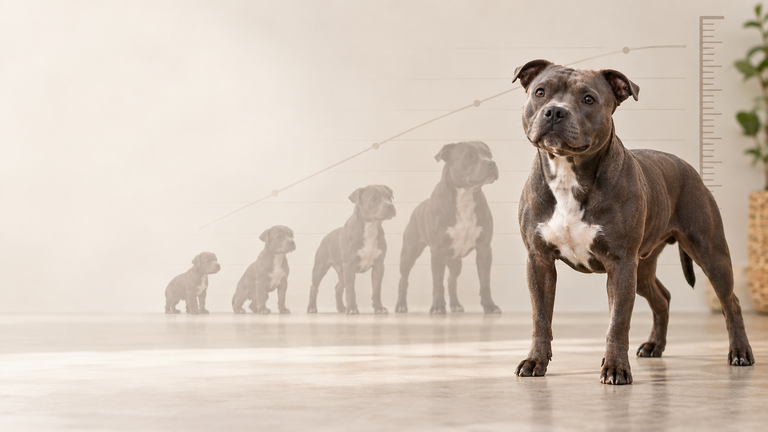
Whatever colour you end up with, the training and care fundamentals are the same – if you’re bringing a Staffy home, our complete puppy training guide is the best place to start. To see how big your puppy is likely to get, the Staffy weight chart covers healthy weights by age.
One Comment