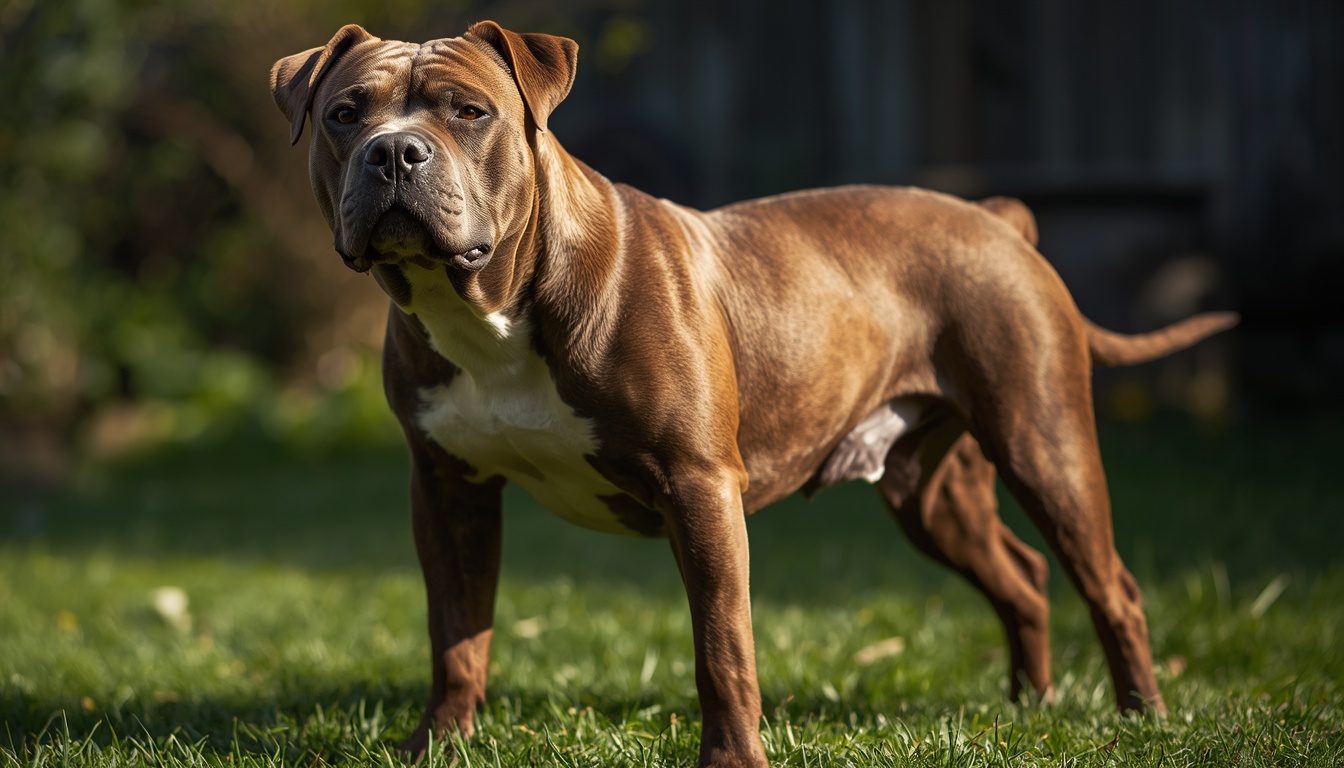
Staffy Feeding Chart
Staffy Feeding Chart: How Much to Feed a Staffordshire Bull Terrier
Staffordshire Bull Terriers are compact, muscular, and food-motivated — a combination that makes them easy to overfeed. Getting portions right matters more for this breed than for a lot of others, because Staffies carry weight visibly on a small, dense frame, and excess weight loads their joints in a breed already prone to hip and elbow issues.
This chart gives you a starting point for adult and puppy portions based on your Staffy’s weight, plus how to fine-tune it for your individual dog. It’s compiled from AKC/UK Kennel Club breed standards and veterinary energy-requirement guidelines used in general practice (the RER/MER formulas vets and vet nutritionists use as a baseline). It isn’t a substitute for advice from your own vet, especially if your Staffy has an existing health condition, is pregnant or nursing, or is significantly outside the weight ranges below.
Quick answer
Most adult Staffies (11–17 kg) need roughly 175–260 g of dry food per day, split across one or two meals, though the exact amount depends on your dog’s weight, activity level, and the energy density of the specific food you feed. Puppies need considerably more relative to their size and should eat smaller meals more often — see the charts below for both.
Staffy adult weight: what’s normal
Under the official breed standard, adult male Staffies weigh 13–17 kg (28–38 lb) and stand 36–41 cm at the shoulder. Adult females weigh 11–15.5 kg (24–34 lb) and stand slightly shorter. Staffies typically reach full height by around 12 months but keep filling out with muscle until 18–24 months, so a 1-year-old Staffy that looks “not quite adult yet” is normal, not a feeding problem.
Body condition matters more than the number on the scale. A Staffy at a healthy weight should have a visible waist when viewed from above and ribs you can feel easily under a light layer of fat, without pressing hard. If you can see the ribs from across the room, that’s usually underweight; if you can’t feel them at all, that’s usually overweight.
For a full picture on healthy weight by age – not just adults – see our complete Staffy weight chart.
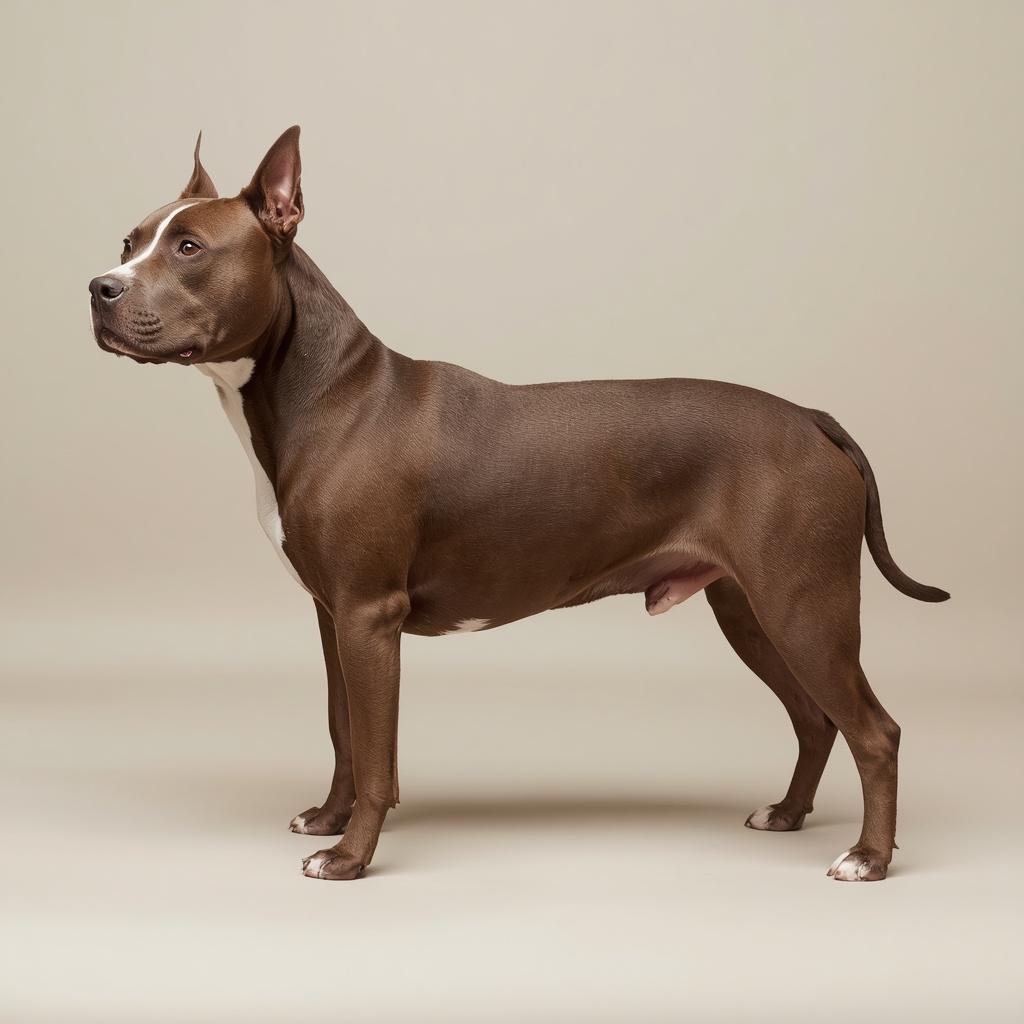
Adult Staffy feeding chart (by weight)
The table below uses the standard veterinary formula for daily energy needs: Resting Energy Requirement (RER) = 70 × (weight in kg)^0.75, multiplied by 1.6 for a neutered adult at moderate activity. This is the figure most vets and vet nutritionists use as a starting baseline — individual dogs can vary from it by as much as 20–30%, which is why the “adjust from here” column matters as much as the numbers themselves.
|
Dog’s weight |
Daily calories (approx.) |
Daily dry food (approx.)* |
|---|---|---|
|
10 kg |
~630 kcal |
~175 g |
|
11 kg |
~680 kcal |
~190 g |
|
12 kg |
~720 kcal |
~200 g |
|
13 kg |
~770 kcal |
~215 g |
|
14 kg |
~810 kcal |
~225 g |
|
15 kg |
~855 kcal |
~235 g |
|
16 kg |
~895 kcal |
~250 g |
|
17 kg |
~940 kcal |
~260 g |
|
18 kg |
~980 kcal |
~270 g |
*Grams are an illustrative example only, based on a food with roughly 360 kcal per 100 g — a rough average for adult maintenance kibble. Kcal density varies a lot between brands and formulas (anywhere from about 300 to 450+ kcal/100g), so always check the guaranteed analysis or feeding guide on your specific bag and use it alongside this chart rather than instead of it.
Adjust from there for:
Whatever the chart says, the real test is your dog’s body condition. If your Staffy is gaining visible weight, reduce food by about 10% and reassess in two weeks. If ribs are becoming easy to see, increase by the same margin.
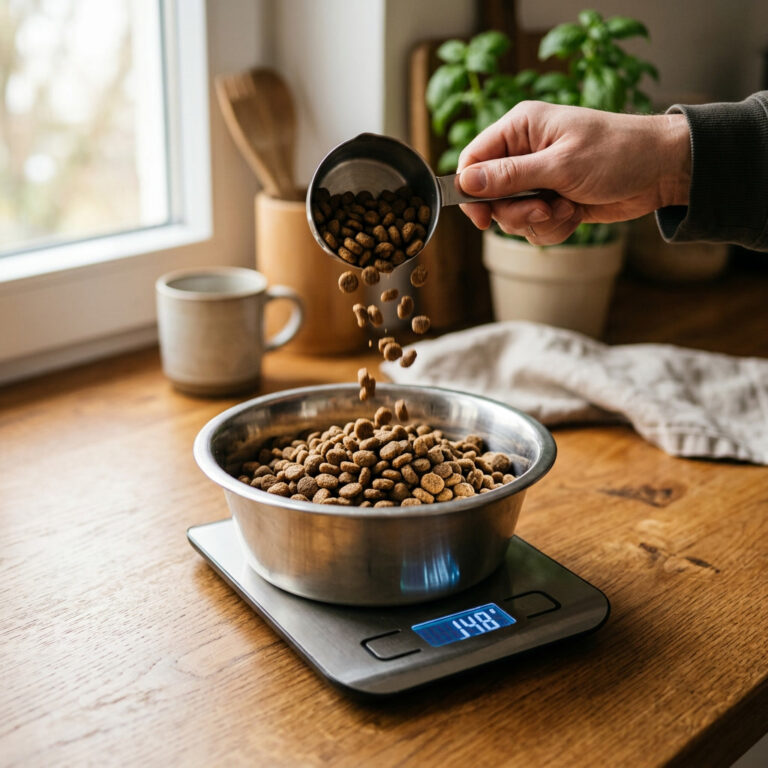
Staffy puppy weight chart (by age)
Staffy puppies grow quickly and unevenly, and weight ranges vary depending on gender and genetics. These are general reference ranges — one healthy pup can sit at either end and still be perfectly normal.
|
Age |
Male puppy weight |
Female puppy weight |
|---|---|---|
|
3 months |
4.6–6.9 kg |
4.3–6.5 kg |
|
6 months |
8.6–12.7 kg |
7.7–11.9 kg |
|
12 months |
Approaching adult range, still filling out |
Approaching adult range, still filling out |
|
18–24 months (adult) |
13–17 kg |
11–15.5 kg |
Weigh your puppy every couple of weeks rather than relying on age alone — a puppy that’s consistently tracking along a curve (even a lower or higher one) is generally healthier than one whose weight jumps around.
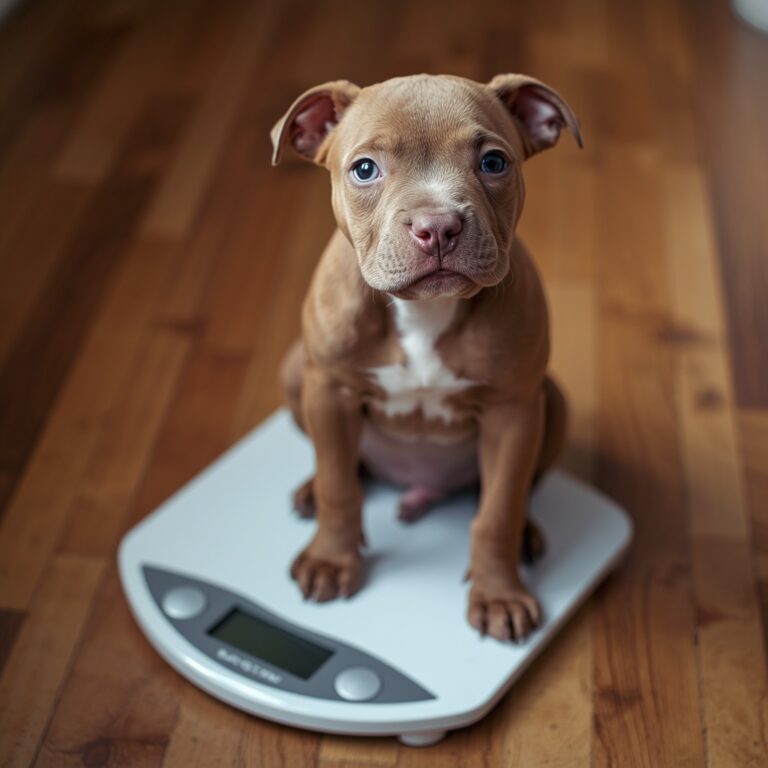
How much to feed a Staffy puppy
Puppies need considerably more energy per kilogram of body weight than adults because they’re building tissue as well as maintaining it. As a rough guide:
In practice, this is why puppy-specific food matters more than portion size alone — it’s formulated with the higher protein, calcium, and calorie density puppies need, and the feeding guide on the bag is usually built around your puppy’s current weight and expected adult size, not their current age alone. Use the bag’s guide as your starting point, weigh-check every two weeks, and adjust in either direction based on body condition rather than sticking rigidly to a printed number.
Meal frequency by age:
|
Age |
Meals per day |
|---|---|
|
8–12 weeks |
4 |
|
12 weeks – 6 months |
3 |
|
6–12 months |
2 |
|
12 months+ |
1–2 |
Avoid free-feeding (leaving food out all day) during this period. Staffy puppies are enthusiastic eaters, and scheduled meals make it much easier to spot appetite changes early and keep weight gain steady rather than spiky.
How to work out your own Staffy’s exact portion
- Weigh your dog (or use their target healthy weight if they need to lose weight).
- Calculate RER: 70 × (weight in kg)^0.75. Most calculator apps or a phone’s scientific calculator handle the exponent easily.
- Multiply by the appropriate factor: 1.6 for a desexed adult, 1.8 for an intact adult, 2–3× for puppies as above.
- Divide the result by your food’s kcal-per-100g figure (on the bag), then multiply by 100 to get grams per day.
- Split across the recommended number of meals for their age.
- Recheck body condition every 2–4 weeks and adjust by roughly 10% in either direction as needed.
Common Staffy feeding mistakes
Treats blowing out the calorie budget. Treats should stay under about 10% of daily calories. A handful of training treats through a session can quietly add up to a meal’s worth of extra food — worth weighing once to see the real number.
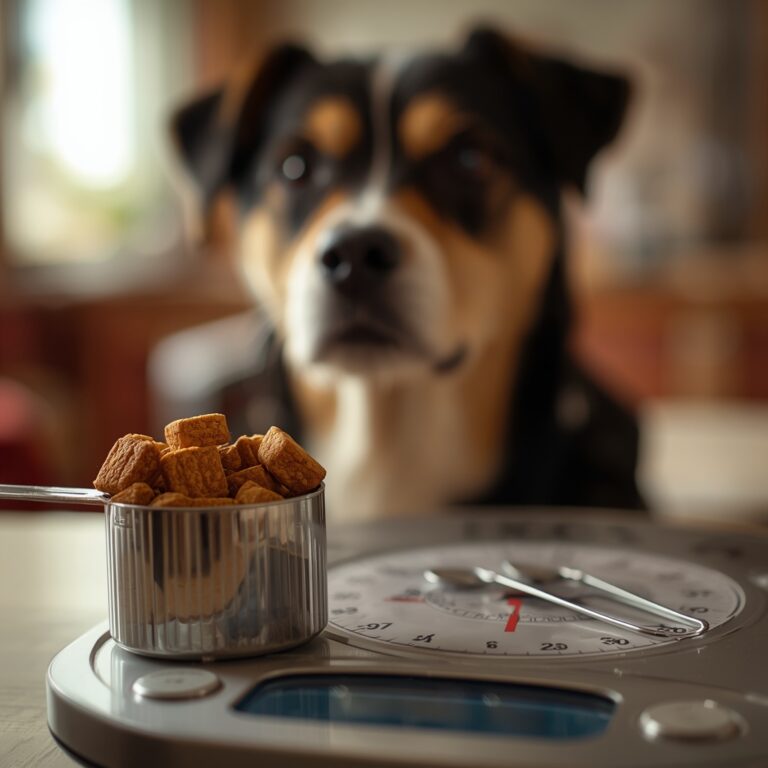
Feeding for the breed’s reputation, not the individual dog. “Staffies are solid, muscly dogs” gets used to excuse weight that’s actually excess fat rather than muscle. The rib-and-waist check is more reliable than a mental image of what a Staffy is “supposed” to look like.
Switching foods too fast. Staffies can be prone to a sensitive stomach when diet changes happen abruptly. Transition over 7–10 days, mixing increasing amounts of the new food with the old.
Matching adult portions to puppy instinct. Staffy puppies often act hungry right up until they’re clearly full-grown. Feeding to that appetite rather than to weight and body condition is one of the more common routes to an overweight young adult.
If your Staffy also deals with itchy skin or hot spots, the food itself matters as much as the amount – see our best dog food picks for sensitive skin.